Mon, Nov 17, 2025

Saudi Arabia’s Solar Surge: How a Petrostate Is Building a Clean-Energy Export Strategy
Asset Management
Sarah   J

Sarah J

Posted on Mon, Nov 17, 2025

3 min read

Share the article with your network

x
Facebook
linkedin

Saudi Arabia is accelerating an ambitious pivot toward renewables, rapidly building utility-scale solar as part of a broader economic calculus to free oil for export and diversify under Vision 2030. The kingdom, long seen as a brake on global climate action, now ranks among the fastest movers in new solar capacity-without signaling an end to its fossil-fuel dominance.


Key assets and capacity ramp-up

  • Al Shuaibah 2, now the country’s largest solar farm, exceeds 2 GW-enough to power roughly 350,000 homes-and is one of several mega-projects advancing across desert sites south of Jeddah. Larger plants are already in development as capacity scales.
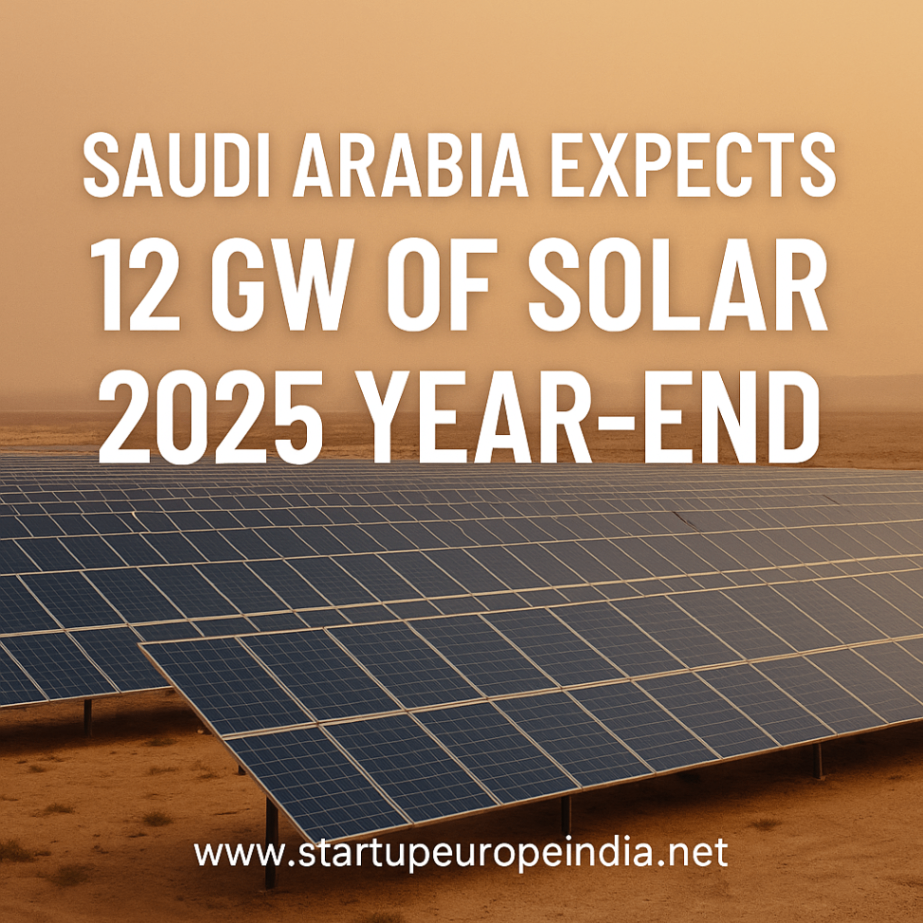
  • After having “next to no renewables” in 2020, Saudi Arabia is expected to reach about 12 GW of solar by year-end 2025, pushing it into the top 10 global markets for annual new solar additions for the first time.
  • Rystad Energy projects more than 70 GW of solar installed by 2030, with onshore wind also entering the mix.


Strategic investment and partnerships

  • ACWA Power, alongside Badeel and Saudi Aramco Power Company (SAPCO), announced a $8.3 billion program to deliver 15 GW of renewables (12 GW solar; 3 GW wind), with operations slated to begin from late 2027 to early 2028.
  • The program aligns with Vision 2030 and the National Renewable Energy Program, under which Saudi aims to source 50% of electricity from clean energy and 50% from gas by 2030.
  • The kingdom is also building clean power supply for flagship developments, including the $500 billion NEOM city and Red Sea tourism projects, with integrated storage and smart-grid solutions.


Economics driving the build-out

  • Utility-scale solar has benefited from sharply lower module prices—driven in part by Chinese panel imports—and battery costs that fell an estimated 40% in 2024, improving solar’s dispatchability and reducing system costs.
  • Saudi Arabia’s solar economics are strengthened by abundant sun, cheap land, low-cost grid connections near major load centers, and economies of scale from very large installations.
  • A core aim is to displace domestic oil-fired power, reserving crude for higher-margin export markets. Burning oil for electricity is comparatively inefficient, and shifting generation to renewables and gas supports export revenues.


Storage and grid flexibility

  • Saudi Arabia is emerging among the top 10 global battery storage markets, with a target of 48 GWh of storage by 2030 and major projects—such as the Bisha 2,000 MWh facility—helping to firm solar output and stabilize the grid.
  • Planned milestones include bringing 8 GWh online by 2025 and 22 GWh by 2026, positioning the kingdom near the global leaders in storage deployment.


Progress and constraints

  • Despite rapid build-out, renewables’ share in the electricity mix remained low at the end of 2024 (around 2%), reflecting how quickly demand is rising and how dominant gas remains.
  • Independent trackers rate Saudi’s overall climate policy as critically insufficient relative to pathways aligned with limiting warming, and analysts caution the 50% clean-electricity target by 2030 may be challenging.
  • Others are more optimistic, projecting the kingdom can surpass one-third renewables by 2030 and achieve 50% soon after, particularly if storage and grid integration keep pace with solar expansion.


Competitive positioning vs. global peers

  • Saudi Arabia’s strategy diverges from current U.S. federal headwinds to wind and solar, pursuing an “all of the above” energy mix while scaling clean-tech manufacturing and EV ambitions.
  • Regionally, the UAE, Oman, and even Iran are expanding renewables to address reliability, growth, and sanctions-related constraints—yet Saudi’s scale, financing, and integrated energy industrial base give it a unique edge.


Energy diversification without an end to oil

Saudi Arabia’s renewables push is rooted in economics, grid modernization, and a bid to future-proof export revenues. Solar deployment, backed by storage and large-scale transmission, is reshaping the domestic power stack. But the kingdom remains a petrostate, expanding gas capacity and asserting oil’s role in global markets and diplomacy. The most likely trajectory is a dual-track energy system: rapid growth in clean power within Saudi Arabia, coupled with sustained-and strategically defended-fossil-fuel leadership abroad.

---

Startup Europe India Network is a B2B Digital Platform enabling partnerships, innovations and acquisitions in the Europe-UK-India corridor.

You may also like

Sarah   J

Sarah J

Thu, Mar 5, 2026

India and Germany Sign AI Pact to Strengthen Global Digital Alliances

India and Germany have signed a strategic Artificial Intelligence (AI) Pact aimed at deepening cooperation in emerging technologies and strengthening global digital alliances. The agreement was signed in New Delhi by Germany’s Digital Minister Karsten Wildberger and India’s Minister for Electronics and IT Ashwini Vaishnaw during the AI Impact Summit.The initiative is designed to transform existing dialogue between the two countries into tangible economic, technological, and research collaboration, reinforcing their role in shaping the global AI ecosystem.Under the pact, both nations will promote joint AI initiatives across sectors such as industry, energy, healthcare, and agriculture, where artificial intelligence is expected to play a transformative role in productivity and innovation.The agreement also aims to encourage collaboration between governments, research institutions, academia, and the private sector, enabling the development of new AI solutions and pilot projects over the next two years.A major component of the AI pact focuses on talent exchange and skilled workforce mobility. Both countries plan to establish contact points to facilitate the movement of Indian students and skilled professionals to Germany’s growing technology sector.The partnership is also expected to strengthen startup collaboration and encourage joint innovation projects in digital technologies, semiconductors, and AI-driven platforms.Germany views the partnership as part of a broader strategy to build stronger digital alliances with trusted partners, ensuring technological sovereignty and diversified value chains in an increasingly competitive global AI landscape.The pact also complements the broader India-EU economic and technology cooperation framework, which seeks to expand digital trade, research collaboration, and emerging technology partnerships between India and European nations.As AI becomes central to global economic competitiveness, the India-Germany partnership signals a growing effort by both countries to shape the future of responsible, secure, and innovation-driven artificial intelligence ecosystems.
Thu, Mar 5, 2026
India and Germany Sign AI Pact to Strengthen Global Digital Alliances
Sarah   J

Sarah J

Thu, Feb 19, 2026

OpenAI for India: Infrastructure, Enterprise Adoption, and Workforce Scale

On 18 February 2026, at the India AI Impact Summit in Delhi, OpenAI announced OpenAI for India, a long-term programme built around local infrastructure, enterprise deployment, and workforce development. The initiative positions India not only as a large user base for AI tools, but as a strategic geography for infrastructure and institutional partnerships.The announcement makes four commitments clear: build local AI-ready capacity, deepen enterprise integration, expand certifications and academic access, and grow on-the-ground operations in India.Scale of usageOpenAI stated that India now has more than 100 million weekly ChatGPT users. That scale alone explains why the company is formalising a structured programme rather than continuing with isolated commercial partnerships. India is already one of the largest markets for AI usage globally; the announcement recognises that reality and moves toward institutional integration.Infrastructure: Data residency and capacityA central element of the programme is a partnership with the Tata Group, specifically through Tata Consultancy Services (TCS).OpenAI will become the first customer of TCS’s HyperVault data-centre business. The arrangement begins with 100 megawatts of AI-ready capacity, with the potential to scale to 1 gigawatt over time. The stated objectives are data residency, security, and reduced latency for mission-critical and government workloads.This is operationally significant. On-shore data capacity addresses regulatory and enterprise concerns around cross-border data flows. Reduced latency matters for real-time AI applications. Dedicated AI-ready infrastructure signals that the company is not treating India as a peripheral deployment region, but as a primary infrastructure geography.The reference to the global Stargate effort indicates that India is being folded into OpenAI’s broader data-centre expansion strategy rather than handled as a standalone market experiment.Enterprise rollout: From pilot to institutional useThe programme also includes a strategic enterprise collaboration with the Tata ecosystem. OpenAI plans to deploy ChatGPT Enterprise across Tata employees, beginning with hundreds of thousands of TCS employees. The announcement also references the use of OpenAI’s Codex to support AI-native software development workflows.For a services firm of TCS’s size, this represents a potential shift from experimental AI usage to standardised deployment. The scale of the employee base makes this one of the largest structured enterprise rollouts announced publicly.The practical impact will depend on implementation details that have not yet been disclosed: governance frameworks, access controls, internal policy integration, measurement of productivity outcomes, and alignment with client confidentiality requirements. But the signal is clear — AI tools are being positioned as core enterprise infrastructure rather than optional add-ons.Workforce and education: Certifications and accessThe announcement extends beyond enterprise. OpenAI will expand its certification programmes in India, with TCS becoming the first participating organisation outside the United States for OpenAI Certifications.In addition, OpenAI is providing 100,000 ChatGPT Edu licences to selected institutions, including:Indian Institute of Management AhmedabadAll India Institute of Medical Sciences, New DelhiManipal Academy of Higher EducationUniversity of Petroleum and Energy StudiesPearl AcademyThe institutions listed span management, medicine, engineering, and design. That breadth suggests a cross-disciplinary approach rather than limiting AI access to technical departments. The long-term question will be how these licences translate into curriculum integration, assessment standards, and employability outcomes.Local presence: Expanding operationsOpenAI also plans to open offices in Mumbai and Bengaluru later in 2026, adding to its existing New Delhi presence. This reflects an intent to embed locally — in policy dialogue, enterprise partnerships, and developer ecosystems — rather than operate remotely.Mumbai anchors finance and corporate headquarters. Bengaluru anchors technology and engineering talent. The geographic selection aligns with enterprise and developer priorities.What this means in practical termsThree structural implications emerge from the announcement:First, infrastructure localisation is becoming non-negotiable. Data residency and sovereign compute capacity are increasingly prerequisites for large-scale AI adoption in regulated sectors. By committing to AI-ready capacity inside India, OpenAI is aligning with this requirement.Second, enterprise adoption is moving from experimentation to standardisation. Deploying enterprise-grade AI tools across hundreds of thousands of employees signals institutionalisation. Whether productivity gains materialise will depend on execution, training, and governance.Third, workforce capability is being treated as infrastructure. Certifications and university licences are not marketing gestures; they are part of ecosystem building. AI adoption at national scale requires trained users, not just APIs and data centres.The announcement does not disclose commercial terms, pricing structures, data governance contracts, or deployment timelines. It does not specify how capacity will be phased or when the full 100 megawatts will be operational. These are reasonable areas for follow-up scrutiny.However, the commitments that are public — infrastructure capacity, named institutional partnerships, enterprise deployment plans, and office expansion — are concrete and verifiable. The programme is framed as long-term rather than promotional.India’s scale of AI usage, combined with its services-led technology economy, makes it a consequential market for AI providers. OpenAI for India reflects recognition of that fact. The programme now moves from announcement to execution — and its impact will ultimately be measured not by statements at a summit, but by how effectively infrastructure, enterprises, and institutions translate access into measurable outcomes.---Join the Startup Europe India Network — the network connecting Europe and India’s tech and science ecosystems to drive partnerships and scale innovation.www.startupeuropeindia.net
Thu, Feb 19, 2026
OpenAI for India: Infrastructure, Enterprise Adoption, and Workforce Scale
Sarah   J

Sarah J

Thu, Feb 19, 2026

Google Announces America-India Connect Initiative with New Fiber-Optic Routes to Boost AI Connectivity

Tech giant Google has unveiled a major infrastructure initiative called America-India Connect as part of its strategic expansion in India. The project announced at the India AI Impact Summit 2026 in New Delhi will establish new subsea fiber-optic routes and enhanced digital connectivity between the United States and India, along with strategic links to other regions of the Southern Hemisphere. This move highlights India’s growing importance as a launchpad for next-generation artificial intelligence, cloud computing and digital services. The “America-India Connect” initiative builds on Google’s previously announced US$15 billion investment plan in India over the next five years, which includes the construction of a gigawatt-scale AI data centre hub in Visakhapatnam and expanded subsea connectivity designed to support AI training, hyperscale cloud workloads and high-capacity data traffic. The new subsea cable network will include three undersea paths linking India with Singapore, South Africa and Australia, along with multiple terrestrial fiber routes connecting India with the U.S. and other global nodes. Alphabet CEO Sundar Pichai, speaking at the summit, described the connectivity strategy as part of Google’s long-term commitment to expanding digital infrastructure that underpins artificial intelligence adoption across sectors such as healthcare, education, agriculture and enterprise services. He noted that enhanced fiber-optic and subsea networks are essential to supporting low-latency, high-capacity data flows required by advanced AI applications and cloud computing. In addition to subsea and fiber infrastructure, Google is expanding regional partnerships with institutions and governments to accelerate AI research and public services. The company has earmarked funding and collaborative programs aimed at training talent, delivering responsible AI tools and fostering access to frontier models for scientific and enterprise applications. The new infrastructure anchored by a subsea gateway in Visakhapatnam is expected to deepen India’s role in global digital trade corridors, diversifying connectivity beyond traditional landing points such as Mumbai and Chennai. This diversification enhances network resilience and creates broader routes for global data movements between continents, strengthening access to AI-driven services and digital platforms across emerging and established markets. Google’s investment reflects broader global trends where digital infrastructure particularly fiber-optic and submarine cable networks increasingly shapes economic competitiveness, innovation ecosystems and cross-border data flows in an era defined by cloud computing, digital services and artificial intelligence. Google’s America-India Connect initiative signals a fundamental shift in how digital infrastructure is being positioned as a strategic platform for innovation, collaboration and economic integration across continents. Enhanced subsea fiber connectivity between India and the U.S. not only supports faster AI workloads and cloud computing deployments but also lays the groundwork for cross-regional collaboration between European, Indian and global tech ecosystems.This improved digital backbone strengthens opportunities for startup partnerships in AI, cloud services, cybersecurity, data analytics and digital infrastructure, enabling European and Indian ventures to jointly develop, scale and deploy solutions that require high-performance global connectivity. --Join SEINET - the digital partnership infrastructure for tech businesses and leaders in EU-UK and India.Start with a verified community, and unlock access to the exclusive Leaders Network for qualified founders and decision-makers. Build trusted partnerships and collaborate efficiently across markets www.startupeuropeindia.net
Thu, Feb 19, 2026
Google Announces America-India Connect Initiative with New Fiber-Optic Routes to Boost AI Connectivity