India’s First Offshore Decommissioning Project Sets New Energy Benchmark

_<->1708724263995_9Y10OskXA8FdggLg.jpeg?w=3840&q=75)
Sarah J
Posted on Tue, May 6, 2025
Share the article with your network



New Delhi, May 6, 2025
In a landmark achievement for India’s energy sector, the Panna-Mukta and Tapti (PMT) joint venture, comprising Shell (through BG Exploration & Production India Ltd, or BGEPIL), Reliance Industries Limited (RIL), and Oil and Natural Gas Corporation Limited (ONGC), has successfully completed the country’s first offshore facilities decommissioning project. The safe removal of mid and south Tapti field facilities in the Arabian Sea marks a pivotal moment in India’s energy transition, setting a global standard for safety, sustainability, and regulatory collaboration.
The Tapti gas fields, located 160 km northwest of Mumbai in the offshore Mumbai basin, ceased production in March 2016. The decommissioning project involved the meticulous removal of five wellhead platforms, associated infield pipelines, and the safe plugging and abandonment of 38 wells, all executed in strict compliance with the approved decommissioning plan. The operation also included load-in at an onshore dismantling yard, currently underway at Chowgule Shipyard’s facilities in Ratnagiri, reinforcing India’s domestic capabilities in energy infrastructure.
The PMT joint venture, operating under a production-sharing contract with the Government of India, consists of ONGC with a 40% participating interest, and RIL and BGEPIL-Shell each holding 30%. This milestone project, initiated in 2017, underscores the power of multi-stakeholder collaboration, involving key regulatory bodies such as the Union Ministry of Petroleum and Natural Gas (MoPNG), the Directorate General of Hydrocarbons (DGH), and the Oil Industry Safety Directorate (OISD). The initiative has played a pioneering role in shaping India’s regulatory and operational framework for offshore decommissioning, blending global best practices with local conditions.
“This project sets a new benchmark for responsible decommissioning,” said Nipun Pradhan, Managing Director of BGEPIL and General Manager of Shell Upstream India. “It reflects global expertise, strong collaboration, and an unwavering commitment to safety and sustainability. Shell is proud to be part of this historic journey alongside our partners Reliance, ONGC, and the Government of India.”
Sanjay Barman Roy, President of Exploration & Production at RIL, emphasized the project’s alignment with national priorities. “The safe and responsible decommissioning by the PMT JV marks a significant step forward for India’s energy sector. From the outset, we worked tirelessly to strengthen local supply chains and enhance the technical and safety capabilities of Indian contractors, delivering on the government’s ambition of ‘Make and Break in India’,” he said.
Pankaj Kumar, Director (Production) at ONGC, highlighted the project’s complexity, particularly its proximity to ONGC’s live assets. “This first-of-its-kind large-scale offshore decommissioning underscores ONGC’s commitment to responsible energy practices. It demanded strategic planning, precise execution, and an utmost focus on safety, marking a defining moment in India’s energy landscape,” he noted.
The project awarded major contracts to Indian firms, with Larsen & Toubro (L&T) handling offshore execution and Chowgule Shipyard managing onshore dismantling. This alignment with the ‘Make in India’ vision has bolstered local technical expertise and supply chains, positioning India as a growing player in the global decommissioning market.
Globally, offshore decommissioning is a complex endeavor, navigating evolving regulations, developing contractor ecosystems, and fluctuating market dynamics. The Tapti project’s success demonstrates what can be achieved through coordinated efforts, serving as a model for environmental responsibility and efficiency in India’s energy transition journey. Analysts see this as a catalyst for future decommissioning projects, potentially attracting investment and expertise to India’s offshore energy sector.
The completion of the Tapti decommissioning has also drawn attention from market watchers, with shares of RIL and ONGC gaining focus following the announcement. The project’s emphasis on sustainability and regulatory compliance could enhance the companies’ reputations among environmentally conscious investors, potentially impacting their market performance positively.
As India continues to balance energy security with environmental stewardship, the Tapti decommissioning project stands as a testament to the country’s ability to innovate and lead in the global energy landscape. With a robust framework now in place, the stage is set for more such initiatives, paving the way for a sustainable and responsible energy future.
Disclaimer: The views expressed in this article are based on publicly available information and do not constitute investment advice.
---
Join SEINET – the Europe-India Tech & Science Corridor.
Connect seamlessly with industry leaders, startups, and organizations driving innovation across borders. Sales, Partners and M&A on www.startupeuropeindia.net
You may also like
Sarah J
Wed, May 27, 2026
The European Commission's New Merger Guidelines: What Has Changed and Why It Matters

Sarah J
Fri, May 22, 2026
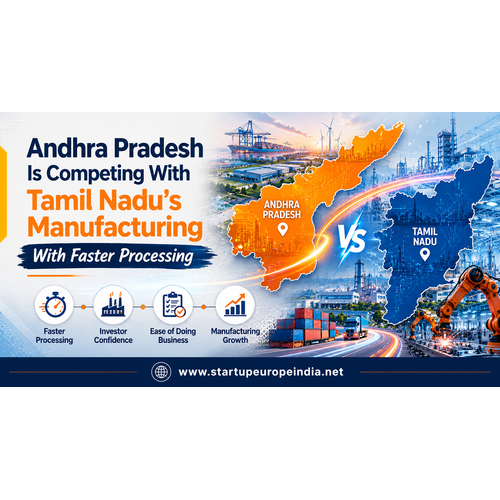
Andhra Pradesh Is Competing With Tamil Nadu's Manufacturing With Faster Processing
Sarah J
Fri, May 22, 2026
GOOGLE I/O 2026: EVERYTHING ANNOUNCED, EXPLAINED